
Instant ‘khana
Instant ‘khana
- August 6, 2026
- Posted by: Sitefun
- Category: News
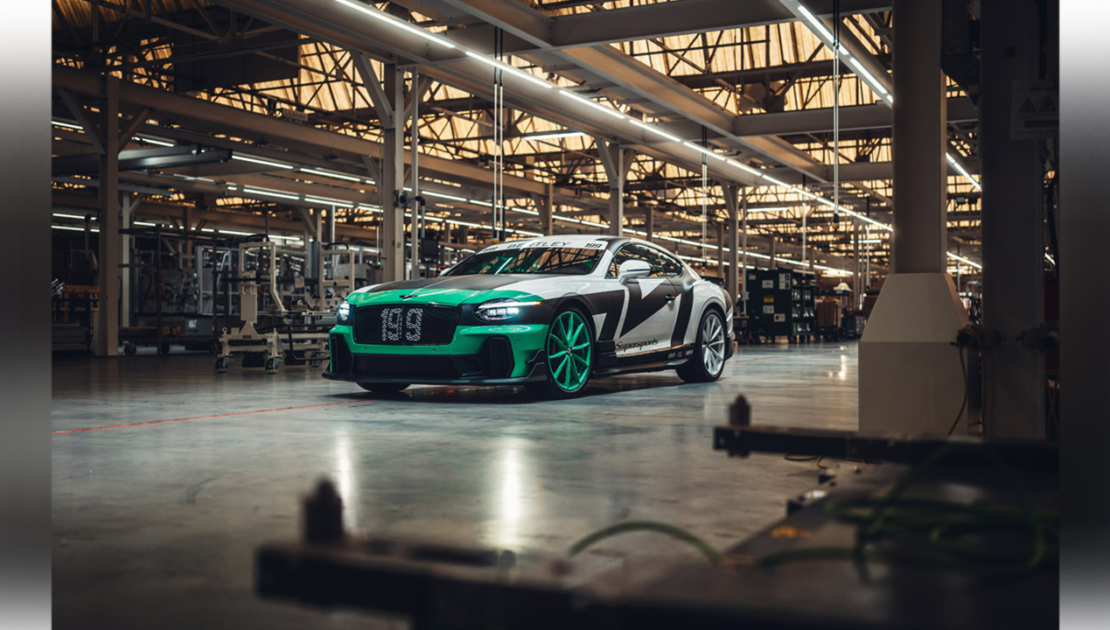
An extraordinary car needs an extraordinary demonstration of its skills. For a machine as exuberant as the new Supersports, that meant a vivid demonstration of its lively spirit.
Within Bentley, there had been a dream to film a high energy festival of hard driving around Crewe, in the style of the great Gymkhana films created by the late Ken Block. In honor of Pyms Lane, the road on which the current factory was founded, this idea was known as ‘Pymkhana’. It just needed the right car for the job and, without question, the 666 horsepower Supersports was it.
Mike Sayer, Bentley’s Head of Product Communications in whose office the Pymkhana idea was first hatched, started the ball rolling by going to see three important people; the head of security, the head of occupational safety, and the head of the overall site. If any one of them raised a reasonable concern, the project would be doomed. As it turned out, all three didn’t like the idea; they loved it and gave it their full support.
PUMP THE BRAKES
There was, however, another hurdle. The Supersports had moved from an idle ‘what if…’ to production approval at breathtaking speed and was set to be announced just a year after it had been signed off. The fact was, no matter how much everyone loved the Pymkhana concept, there simply wasn’t a spare car with which to film it. Enter Alistair Corner, Head of Attribute & Requirements Management. If a car didn’t exist to make Pymkhana possible, his team would build one, starting with an existing Continental GT engineering car which they would, in Corner’s words, “upcycle” into a fully functioning Supersports.
GATHERING THE TEAM
Once the problem of the car itself had been solved the next question was, who would drive it? But this wasn’t a question at all. Since Ken Block’s death in 2023, the Gymkhana flame had been kept burning by Block’s great friend, Travis Pastrana. If anyone was going to bring alive this Pyms Lane version, it should be him. Officially, Pastrana filmed his final Gymkhana last year, but he was won over by this idea.
There was also the vital matter of how to film the whole thing and for this Mike Sayer turned to former Top Gear director, Jon Richards. “Mike sent me a text saying, Jon, I’ve got an idea…” Jon remembers. “And straightaway I said, ‘I’m in’”. Jon headed up to Crewe so that he and Mike could start planning a course around the factory, but his first impressions weren’t promising. “I was walking around the site and everywhere there’s 10mph signs when I was thinking, ‘you’re going to want to do 100mph down here’,” Jon recalls. “But it’s not a racetrack. It’s ultra dense with buildings left, right and center, the absolute opposite of a space you’d want for a Gymkhana type film.” But after inspecting the narrow, tight thoroughfares of the factory, Jon noticed there was one area that was much more open; a vast expanse of perfectly smooth floor inside the brand-new Integrated Logistics Centre – the single most expensive floor ever laid in the factory.
I was walking around the site and everywhere there’s 10mph signs when I was thinking, ‘you’re going to want to do 100mph down here’.
GO TIME
And so, at dawn the next morning, it began. To capture the action, Jon had assembled what he calls a “dream team” of car film makers including Director of Photography Steve Lidgerwood and cameraman Dan De Castro, while a crew of around 100 was in place to keep everything running safely and smoothly, many of them Bentley staff voluntarily giving up their weekend to act as marshals. As soft early morning light dappled the factory buildings, Travis Pastrana strapped into the Supersports for only the second time and loudly went to work.
Jon has made a lot of car films, but working with Travis was clearly something else. “The way he was able to angle the car and place it through these incredibly narrow streets, he’d just send it, get it right. One take. It was incredible to see.”
While the driving in the film had been meticulously planned, there was no script as such and every Travis in-car line – including the perfectly delivered “Gentlemen!” while passing a line of pre-war cars – was ad-libbed. Only one human element was written in; the final easter egg appearance of the boss, Bentley Chairman and CEO Dr. Frank-Steffen Walliser, to lead the clean-up operation at the wheel of a street sweeper.
Once the film was edited, a preview screening was arranged for all the Bentley staff who had worked so hard on the shoot and such was the joyful reaction that when it ended everyone asked to play it again. Which isn’t surprising because the finished film, entitled Supersports: FULL SEND, is a three-minute masterpiece.
Leave a Reply
You must be logged in to post a comment.